The Mirror's Truth
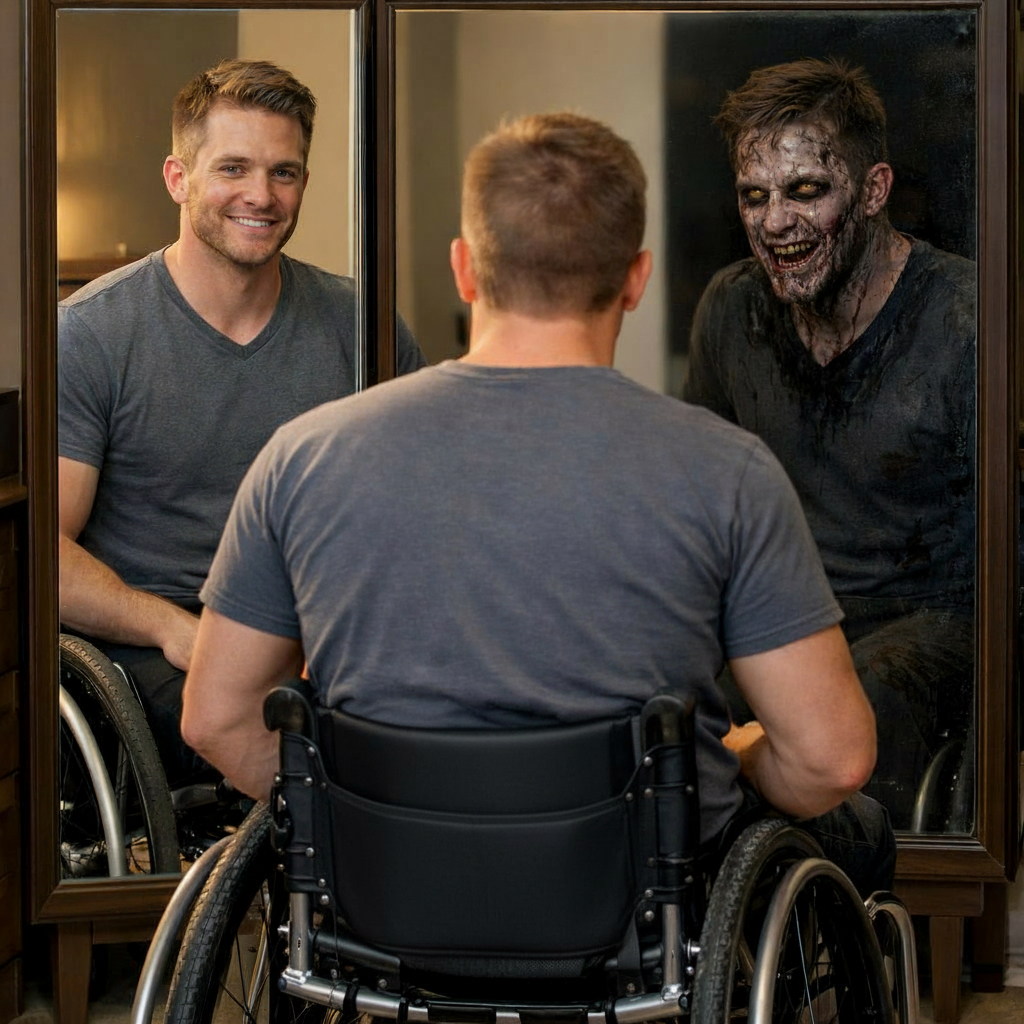
The mirror never lies, but it rarely tells the whole truth. Each morning I face it, waiting to see whether it will reveal the person I believe myself to be, or the one the world insists on seeing. Some days, the reflection feels like an ally—steady, familiar, even kind. Other days, it feels like a stranger, holding up every tremor, the curve of a twisted spine, every reminder that my body is at war, mostly with itself.
This look in the mirror can determine the tone of my day. A day filled with confidence and strength. Or self‑doubt and a touch of despair. Largely determining if today might be a day to fight for something new. Or a day trying to grimly hang on to what I have.
Visible Truths
The mirror shows what cannot be ignored. The tremors in my hands, the curve of a twisted spine, the fatigue etched into my posture—all of it is laid bare without mercy. These are truths that others notice too, the ones that shape first impressions and silent judgments. The reflection insists on reminding me of the body I inhabit, a body that is at war, mostly with itself.
It is a truth that can feel heavy, because it reduces me to what is seen. The mirror does not ask about the effort behind each movement, or the determination that gets me through the day. It simply reflects the surface, and in doing so, it risks defining me by limitations rather than by the persistence that lives underneath.
Hidden Truths
The mirror cannot show all of the truths that matter. It cannot capture resilience, or the quiet victories of endurance. It cannot reflect the stubborn hope that rises even when despair presses close. There are truths that live beyond the glass, revealed in the desire to fight, the will to go on. Choosing to live rather than just existing.
But there is another truth I wrestle with: the wish to be seen. Not just looked at, but truly recognized. When that recognition is absent—when people glance away, or reduce me to the curve of a spine or the tremor of a hand—I can feel like a freak, as though my humanity has slipped out of sight. The hidden truth is that being unseen can wound more deeply than any reflection.
Public and Private Truths
The mirror gives me one version of truth, but the world offers another. In private, I see the tremors, the curve of a twisted spine, the fatigue that settles into my body. I know the battles I fight each day, mostly with myself. But in public, the truth shifts. People see only fragments—sometimes pity, sometimes dismissal, sometimes nothing at all.
That gap between private truth and public perception can be brutal. When I am not truly seen, when recognition is withheld, I can feel like a freak, as though my humanity has been erased by silence or avoidance. Yet when someone does see me—when they look past the surface and acknowledge the effort, the resilience, the person—I feel restored. In those moments, the public truth aligns with the private one, and I am whole again.
The Risk in Being Seen
While being truly seen can make me feel whole again, it carries its own danger. The risk is that I might cling to the person who offers that recognition, holding on too tightly to the rare gift of being understood. In that intensity, the experience can grow larger than either of us is ready for—turning a moment of connection into something heavy, something charged with more meaning than it was meant to bear.
It is a reminder that even recognition, as healing as it feels, must be balanced. To be seen is vital, but to depend on another’s gaze for wholeness can leave me vulnerable in ways I cannot always control.
After the Glass
The mirror will always show me what is there: the tremors, the curve of a twisted spine, the fatigue that settles into my body. It will never soften its truth, and I cannot ask it to. But I am learning that the mirror’s reflection is only part of the whole.
The deeper truth is mine to carry. I can choose to let the reflection set the tone of my day, or I can remind myself that resilience, hope, and determination live beyond what glass can capture. The mirror may define the surface, but it cannot dictate the meaning.
So I sit before it, not as an enemy but as a companion—one that reminds me of the battles I face, while leaving me free to decide how I will fight them. The mirror shows what is visible. I live with what is. And in that living, I move forward. This movement may be for a day, a couple of hours, or five minutes.
© 2025 cdilks.com